Showing posts with label books. Show all posts

Tuesday, 30 June 2015

Review: The Girl on the Train by Paula Hawkins

Looking for a novel to live up to that suspenseful-buzz Gone Girl gave me (and provide a break from final-year-essay-induced-anxiety), I downloaded The Girl on the Train and dipped in and out of it as I completed my last semester at university. There had been plenty of hype surrounding this novel (two million copies sold in 3 months) and I was curious to see what all the fuss was about.

Within minutes of reading it, The Girl on the Train had me gripped; the simplistic notion of the lead character, Rachel, commuting and creating fictitious lives for the people she sees on her train journey is a surprisingly effective hook. 

Hawkins masterfully makes the domesticated settings of the novel curious and unassumingly dark spaces; the perfect couples inhabiting the average outer-London houses, and the seemingly normal Rachel who observes them, all hold disturbing secrets. The reveal of the characters' underlying nastiness (Rachel's alcoholism, Megan's past, etc.) muddy the edges of this seemingly fine suburban existence.

It is Hawkins' intentionally unlikeable characters that made this novel an uncomfortable, and admittedly sometimes frustrating, read for me. I found Rachel an annoying character, and I was unable to sympathise with her appetite for drink. I had to repeatedly remind myself that not all characters are meant to be liked, but I feel I have to hold onto at least one shred of empathy. Perhaps this frustration played out because I had expectations of Gone Girl in the back of my mind when I read The Girl on the Train; despite revelations about his seedy affair, I still liked Gillian Flynn's Nick (perhaps this likeability was due to the often comic sibling dynamic between him and Margot?)


My own prejudices aside, the way Hawkins manipulates the readers' perceptions of the main male characters is particularly striking. Tom, Scott and Kamal all move on a spectrum of evilness, with sometimes dramatics shifts in character. 

Ultimately, my main issue with this novel is the way Hawkins presents memory. The plot is driven by Rachel uncovering lost memories of an event that occurred on the night of Megan's disappearance, and at times I found the representation of her 'piecing' together such memories too contrived. The fragmentation of memory does, however, seem a reliable depiction of Rachel's struggles to overcome the blackout she experienced. 

After finishing the novel, I was left wondering about how gender conceptions are subtly explored. Whilst narratives of male-on-female violence are so often reported in today's media, Hawkins' novel does not group female characters in a 'victims' camp and males 'attackers'. The novel alters readers' perceptions of male and female characters' violent capacities - the once demonised characters are redeemed to innocence and the once weak commit evil acts.

Whilst The Girl on the Train is sold as a the perfect fast-paced summer read, it is interesting to explore Hawkins' nuanced questioning of public gender preconceptions/misconceptions.

Image source: Writing Times.

Tuesday, 30 December 2014

My Favourite Books of 2014

Admittedly, it's been a while. I've been brimming with ideas for this here blog but with the avalanche of commitments that rudely fell upon me at the beginning of September (e.g. big-scary-final-year-student-things-gross), The Old Curiosity Blog was set aside reluctantly. Determined to get back into the swing of things, I thought I'd write a little something about my favourite books of 2014 (with a particular focus on new books that have been published in 2013/14).

Consider this a shortlist of my favourites - the books that made me laugh, think, and admire the writers for their ability to create characters with voices that launch off the pages.


1. Mr. Loverman by Bernardine Evaristo

With her acting background and experience as a poet, Evaristo's mix of lively, vibrant dialogue and beautifully lyrical moments makes Mr. Loverman a striking read. This novel follows Barrington, an elderly member of the Caribbean community of Hackney, living with his religious wife of 50 plus years, who has kept a secret for most of his life. He is homosexual, and has been having an affair with his soulmate, Maurice, since childhood.

I fell in love with Barrington - for his wit, for his ability to shock, for his way of talking - and I read this novel with a pang of sadness in my stomach that I would eventually have to finish it and leave Barrington's colourful world behind. That said, there are moments in the book where Barrington can strain your willingness to love him - Evaristo does not create a victim of circumstance. She makes you question the impact of Barrington's double life on his wife, and her missed opportunities at receiving love.

2. Mrs Hemingway by Naomi Wood

Although I've never read Hemingway, my nosey nature drew me to this book. It cleverly traces the pattern of mistress to marriage to mistress to marriage throughout Ernest Hemingway's life, giving voice to the women who had all, at one point, become Mrs Hemingway. For Hadley Richardson, the first Mrs Hemingway, I felt a surge of sympathy; so much so that when I read about Fife (Pauline Pfeiffer, the soon-to-be Mrs), I wanted to protect Hadley from the oncoming heartbreak. It's a feeling that does not last; each woman that comes into Hemingway's life charms you and makes you want to guide them away from the inevitable damage their marriage will bring. Wood's novel made me question my loyalty to these characters; am I cheating on the current Mrs Hemingway by warming to the woman that will take her place?

3. Not That Kind of Girl by Lena Dunham

This is a book that has received a huge amount of hype, and I'm glad to say it has not disappointed. It croons Dunham's voice, and her ability in the HBO series Girls to depict the unsettling to the hilarious comes through in this book. Not That Kind of Girl should spark questions in the reader and bring out conversations to share with others. What I have "learned" from the book is a whole other matter (and a whole other blog post, coming soon).

4. The Miniaturist by Jessie Burton

Speaking of books with a hype, The Miniaturist has dominated this year's bestseller lists and was recently announced as the Waterstones Book of the Year. Early on in the summer break from university, I was doing work experience placements in the publishing industry, and there seemed to be a buzz about this book in the various offices I worked at. Curious, I started reading the book on the commute to and from London. The Miniaturist transported me away from the those boring commutes.  It maintained mystery, and as a reader I felt the same sense of eagerness  to unlock the secrets of the Miniaturist as the protagonist, Nella. At times I felt the repairing of Nella and Johannes' relationship was rushed in the scheme of the novel, and I felt the reveal of the Miniaturist's circumstances could have gone further.

5. All the Days and Nights by Niven Govinden

Over the summer I was asked to review Govinden's latest novel for the Jerwood Fiction Uncovered Prize, and you can read the article here. All the Days and Nights tells the story of a dying artist and her muse-and-husband in the final months of her life; we see their relationship strain under the pressures of illness and her obsession to make art, and his escape to track down the portraits he sat for over the course of their marriage. I have included it on this list because I happened to read this book at a difficult point in my year, and this novel guided me through the difficulties of grief. I guess it proved that sometimes it's the time in your life in which you read a book that makes it all the more special.

Sunday, 30 November 2014

What does a tandoori lamb chop and a book have in common?


In an attempt to sell his latest novel, Meatspace, Nikesh Shukla decided to take things literally and send a lamb chop into space with a weather balloon, lots of helium and a Go-Pro camera. The stunt has caught the attention of many and was even featured as a question on Have I Got News For You. Time will tell if Shukla's sales will increase, though it seems the message to take from this random space mission is that authors have got to take it upon themselves to come up with creative marketing solutions for their books. 

Shukla, an 'ex-rapper' according to his website, also filmed a music video for Meatspace:


Friday, 11 July 2014

Who Needs A Holiday? 2014 Releases To Help You Escape

Are your social media feeds clogged with friends bragging about their holiday? There's nothing worse than switching on your Facebook/Twitter/Instagram to be met with tons of tanned-legs-on-the-beach shots and postcard perfect photos of foreign lands when you are stuck in the English summer rain. The constant bragging of your travelling mates is sure to send you into a spell of green-eyed envy. But why not escape to another country with some new fiction? Here is a selection of 2014 releases set in foreign locations to help you imagine you are somewhere else:

The Vacationers by Emma Straud


This May 2014 release seems a perfect holiday book - just look at that title! Even looking at the cover and imagining the heat of the sunshine warms me up a little. Straub's second novel focuses on the Mallorca holiday of New York family, the Posts, and examines each character's issues with precision. If you'd like to know more, take a look at this Huffington Post guide to the novel.

Lucky Us by Amy Bloom


Fancy an adverture across America...in the 1940s? Travel back in time with Amy Bloom's Lucky Us and follow two half-sisters' expedition across the US - including glitzy Hollywood and racuous Brooklyn. Read more about it at Bustle.

Nobody Is Ever Missing by Catherine Lacey


This new novel is about a woman's spontaneous escape from her stuffy life in America to New Zealand. Frequently described as 'accomplished' by reviewers, hopefully Lacey's debut will transport readers to their own escape. You can read more about this title on Slate.

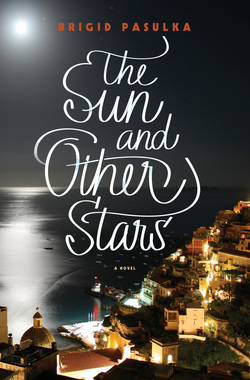
The Sun and Other Stars by Brigid Pasulka


If you fancy a setting like the Italian Rivera, Pasulka's latest is the escapism novel for you. The book homes in on loss and the restoration of hope and love, and you can read more about it on the author's website.

Thursday, 23 January 2014

#readwomen2014: Let's challenge our sexist reading habits

Joanna Walsh's recent article for the Guardian poses an interesting literary-themed New Years resolution. Reflecting on VIDA's annual calculation of the rates of male and female publication, in which their attractive pie charts show that female authors are considerably discriminated against in the publishing world, Walsh decided to start a new reading campaign. Walsh asks readers to think about the gender of the next author they are about to select from their bookshelves, and advises them to pick a female author as a way to combat pervasive sexist reading habits. The #readwomen2014 hashtag promotes Walsh's aims to challenge the inequality found in the book market, and she's even created some female author inspired bookmarks to further the cause.

Interestingly, Walsh also considers the way female writers are published as a detriment to gender equality in publishing. The flowery, girly covers used for female author's books take away their serious, weighty sentiments and create an impression that the title contains writing of 'delicacy' (bluergh). You may be baffled to learn that Lionel Shriver's 'nasty' novel Game Control was originally destined for an equally 'feminine' cover. It's a publishing approach that seems old fashioned, not to mention patronising, but Walsh points out that it is a trend still very much present in the publishing industry.

I definitely think this is an innovative and thought-provoking way to challenge sexism in reading, and the use of social media is certainly going to attract more public support. In my own experience, I have been witness to a reader's surprise that their 500-page WWI themed novel was, in fact, written by a female author (shock, horror).

It's true that male writers dominate the bestseller lists, book charts and English degree syllabuses. I am frequently asked to consider the topic of the literary 'canon' as a point of discussion in my university seminars, and so I am fully aware how male-dominated (and, more often than not, dead) the literature curriculum is. Perhaps universities are becoming more aware of this issue, as it was a surprise to me that the first author I was asked to read at university was Hilary Mantel.

The #readwomen2014 campaign is gaining attention. Glamour, Harpers Bazaar and LA Times are just a few publications to take notice and promote literary gender equality. So, why don't you join in! Who is your favourite female author? And, who is the next female author you will read?

Here is Joanna Walsh's article - read it for yourself!

Wednesday, 8 January 2014

Books set to dominate your shelves in 2014

A belated Happy New Year to my readers! Having recently read some exciting things about new book releases for this year, I thought that my first post of the year let you know what to look out for in bookshops this year!

So, without further rambling introductions, here are a few titles to add to your 'To Read' list of 2014:

1) The Miniaturist by Jessie Burton

Set to be published in July 2014 (just in time to pack for your summer holiday), this debut novel from Burton is set in 1686 Amsterdam and focuses on the stories of two women seeking 'freedom in a repressive, judemental society'. The Miniaturist also contains 'a trial, a hidden love, a miniaturist who predicts the fate of her customers, a parakeet called Peebo and a plan to escape to the sea', according to the author's website. Intriguing? Well, Harper's Bazaar, Stylist Magazine, ASOS and the Guardian seem to think so and have recommended Burton's debut. The Miniaturist is definitely one to look out for!

2) The Poets' Wives by David Park


If you're interested the lives of writers' behind their words on page, David Park's novel about three wives of important poets could be the right read for you. It's focus on three women who led their lives in the shadows of their husband's work is a compelling approach. Although the three women (Catherine Blake, Nadezhda Mandelstam, and a contemporary poet's wife) have their obvious differences - across the centuries and countries that separate them - Park finds a way to net their stories cleverly together. 

3) The Quick by Lauren Owen

Already recommended by Hilary Mantel and Kate Atkinson, The Quick is set in Victorian England and is a tribute to the traditional Gothic novel. Though set in a period we have all probably read a lot about, this debut promises to be a nuanced story of Victorian London.


4) We Are Not Ourselves by Matthew Thomas

This is another highly anticipated debut of 2014 and focuses on a heartbreaking story of an Irish-American woman, Eileen, 'raised in 1940s Queens by an alcoholic mother and a union-employed father, as she grows up, marries, and early-onset Alzheimer's affects her family'. There is much buzz surrounding this novel, as publishers on both sides of the Atlantic offered up six figure sums to land the title, according to the Guardian.

5) Elizabeth is Missing by Emma Healey

28-year-old debut novelist Healey has also received a lot of hype for Elizabeth is Missing, set to be published in June. It follows elderly Maud's attempts to find a lost friend whilst also coping with the on-set of dementia. Set to be simultaneously heartbreaking and comic, look out for Healey's novel soon!


Monday, 12 August 2013

Ever had second thoughts?

If you're a perfectionist, you might just have something in common with one of your favourite authors. Back in May, some of the bestselling current authors ( such as J.K. Rowling, Margaret Atwood, Seamus Heaney - to name but a few) were encouraged to annotate first editions of their most notable or popular novels which would then be auctioned in order to raise funds for English PEN.

The Guardian's gallery of images of the handwritten notes makes for interesting viewing. Some authors have used the opportunity to reveal how their own personal memories feed into their writing. Hilary Mantel, for instance, describes her sensory experiences in the following handwritten anecdote in an early edition of Wolf Hall: 


Here, Mantel writes that she got the inspiration to write about 'the smell of cedar and spices, sombre, distant, desert-dry' from exploring medieval churches in Norwich, 'There is or used to be an ecclesiastical museum in one of Norwich's many medieval churches, & many years ago I sneakily lifted the lid of a chest & inhaled this unforgettable perfume. Richer than I could ever have imagined'

When annotating a first edition of The Remains of the Day (one of the best novels I've read over the last few years, and it was only when I was sat in a classroom analysing it did I really begin to appreciate its message), Kazuo Ishiguro gives the reader insight into the choice of setting part of it Salisbury. The place is apparently special to the author because of a long bike ride he went on at the age of 15.


Ishiguro writes, '...Salisbury has always held a special magic for me. It made sense it should be Steven's first stop too'.

Also, take a looks at Ishiguro's fantastic illustrations!


Nonetheless, some of the writers have used this opportunity to express their regrets and second thoughts about their work. Yann Martel seems to have a bit of a 'WHY did I write that moment?!' when he reads over the Author's Note section of Life of Pi - 'Never liked this first line'


Seamus Heaney, too, reveals a temptation to revise a popular poem:


So, it would seem that even some of the most successful writers have tempting desires to perfect their work even years after it has been published and reached notability. Maybe every writer has a perfectionist side to them?

Want to see more? Follow the link to the Guardian website above.


Sunday, 11 August 2013

Explaining the connections between Bret Easton Ellis's novels

Ellis fans! Here is a step-by-step guide to the connections between BEE's novels and a clear mapping of the recurring characters that feature in all of his books from Less Than Zero to Imperial Bedrooms.

Click here!

Not only has the author of this article created a clear guide for new fans to navigate Bret Easton Ellis's work, but it is interesting for those who have read the novels in the past too.